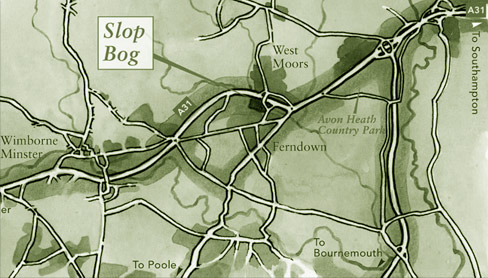
Nature Notes June/July 2025
Date Published: 02-08-2025
The weather during June and July was very hot resulting in the ground on site becoming very dry.
SIGHTINGS
Birds (seen or heard): Carrion Crows, Jays, Magpies, Buzzards, Herring Gulls, Black-headed Gulls, Sparrowhawk, Tawny Owls, Great Spotted Woodpeckers, Wood Pigeon, Stock Doves, Stonechats, Siskins, Chiffchaffs, Blackcaps, Bullfinches, Chaffinches, Greenfinches, Goldfinches, Nuthatches, Treecreepers. Goldcrest, Song Thrush, Blackbirds, Wren, Robins, Dunnocks, Coal/Blue/Great/Long-tailed Tits.
Mammals: Grey Squirrels, Pipistrelle Bats, Saprano Pipistrelle Bats.
Plants (in flower or berry): Dandelions, Buttercups, Cut-leaved Geranium, Arum Lily, Rowan, Common Vetch, Wild Cherry, Cotton Grass, Bog Asphodel, Blackberry, Ling, Cross-leaved Heath, Bell Heather.
Insects: Flies, Midges, Buff Tailed Bees, Hover Flies, Wood Lice, Garden Spiders, Sheet Web Spiders, Ants, Wasps, Five Spot Ladybird, Common Field Grasshopper.
Dragonflies/Damselfly: Small Red, Common Blue, Southern Hawker,
Broad Bodied, Banded Demoiselle.
Butterflies/Moths: Large White, Brimstone, Orange Tip, Peacock, Red Admiral, Holly Blue, Gatekeeper, Silver studded blue.
Pond Life: Whirlygig Beetles, Pond Skater, Backswimmers.
Due to the fierce heat, which continued for prolonged periods, there were reduced sightings of resident wildlife.
The numbers of bird fledglings was down.
A smaller number of Dragonflies/Damselfly were seen than in previous years.
Recorders; C Wilcox K Wilcox
NATURE FACT
Damselflies feed on other insects, such as Caddisflies and Alderflies, which they catch in flight or pick off riverside plants. Being relatively slow flyers, they themselves sometimes fall victim to the larger and faster Dragonflies. The nymths (larvae} of the Damselfly are also carnivorous and feed in the same way as Dragonfly nymphs – by extending a barbed mask from the lower jaw which impales the prey and draws it back to the mouth. In winter the nymths hibernate in mud at the bottom of the stream. They have no pupa stage.
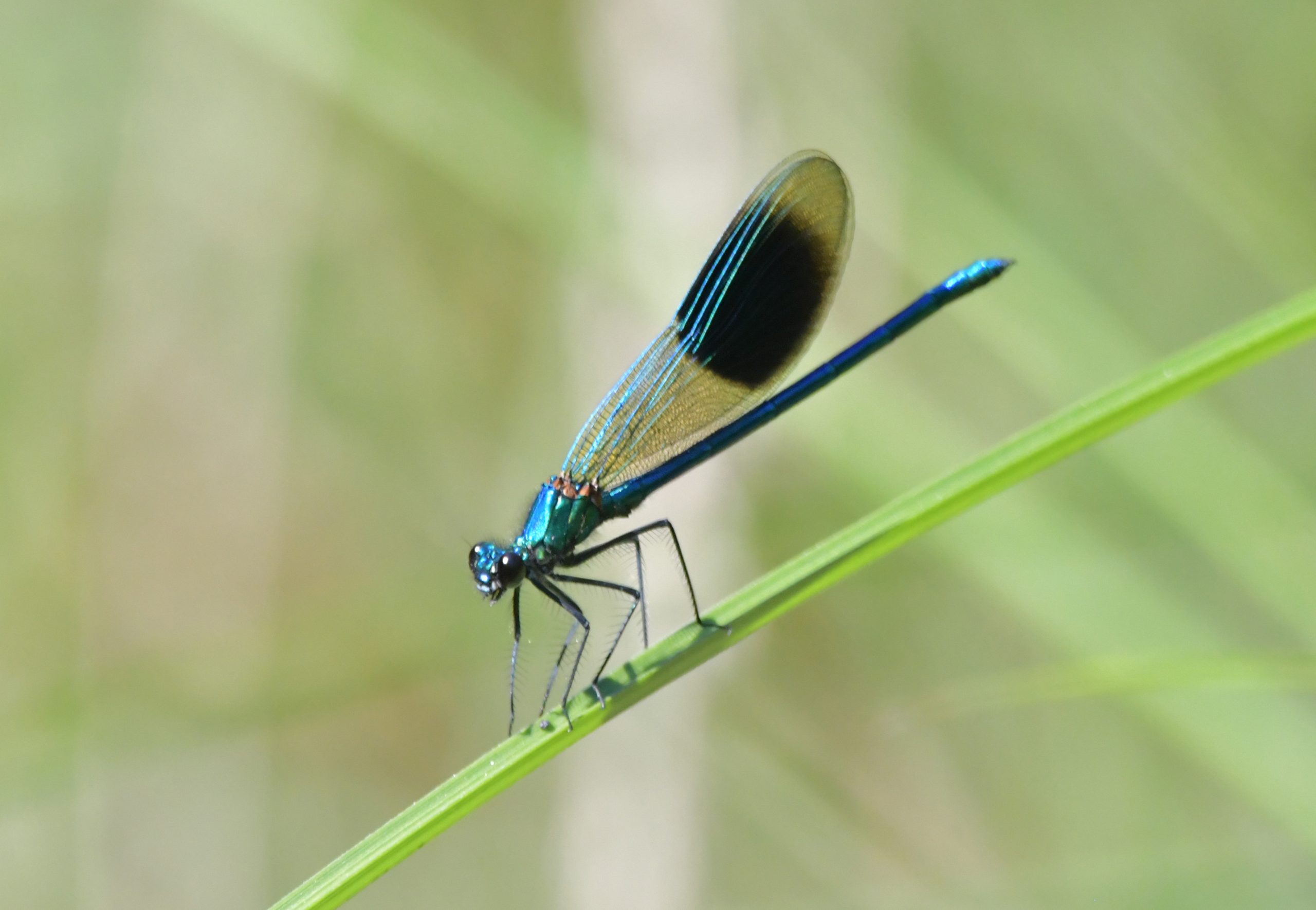
Banded Demoiselle Image by K Wilcox